
November 2026 Meetup
Matt delivers the news roundup.
Headlines
Qwenputer
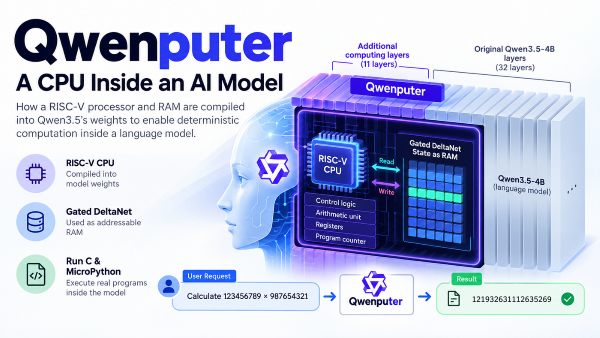
Qwenputer is a stock Qwen 3.5 4B model with a RISC-V CPU compiled into its weights, running on its own Gated DeltaNet layers as RAM created by Divyansh Agrawal. It’s an interesting architecture twist to the current LLM models that provides a way to integrate a CPU into a model. Qwenputer has the ability to provide deterministic results for anything that is ‘run’ on the processor.
Including MicroPython.
Because the integrated processor was a RISC-V, it was relatively easy to compile MicroPython and have that run on the processor. You can then ask the LLM model to create and run MicroPython code:
uv run python -m chipformer.rv.chat qwenputer-rv \
  --firmware path/to/micropython.elf \
  --ask "Run a MicroPython script to compute the first 10 Fibonacci numbers."
Melbourne MicroPython meetup blog update

An issue we have with these news roundup notes is that video recordings of the meetups are published after the news blog post. I never seemed to be able to go back and update the blog posts with the video links when they were published.
So it was nice to revisit all of the blog posts at this site to add the meetup videos!
mim Update
Oliver has rolled out some updates to mim (checkmim.com), the excellent MicroPython library index.
In particular, development of libraries using LLMs is better supported - it’s now possible to generate a token so an LLM can submit a library on your behalf and there is a clear llms.txt that you can point your clanker to so it can find, use and submit packages.
I was able to use these features to index nearly 20 libraries in the past couple of weeks. My LLM now prompts me: “Would you like to submit this library to mim?”.
Hardware news
STM32G5 and STM32A series
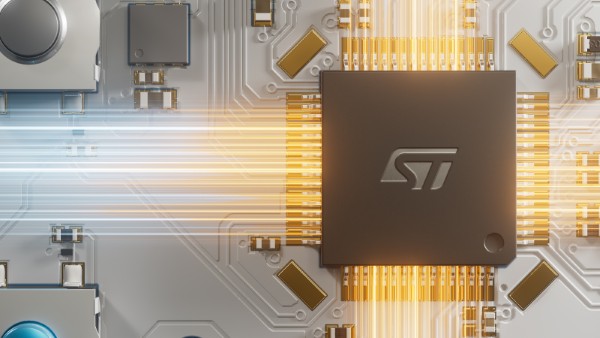
ST had a couple of big announcements. Relevant to us was the STM32G5 family will be launched, effectively as a successor to the popular G4. And the A series was revealed, intended for use in ‘reliable’ domains like automotive, medical etc.
Pimoroni Art Matrix

Pimoroni have released the Art Matrix, a beautiful 128x128 RGB LED matrix display powered by the Raspberry Pi 2350. That’s 16,384 pixels!
Hackster.io: Pimoroni’s MicroPython-Powered Art Matrix Puts an RP2350 in Control of 16,384 LEDs
Specs:
- RP2350B, 8MB PSRAM, 16MB Flash
- Raspberry Pi RM2 wireless module (CYW43439), 2.4GHz Wi-Fi and Bluetooth
- 45 plugins at launch, covering art, weather, space and more
- 4x rear ambient RGB LEDs
- 4x push buttons
- 2x Qw/ST (Qwiic/STEMMA QT) connectors for attaching breakouts
- Black aluminium frame, including magnets for metal surfaces
- MicroPython
A$268
Scout wireless probe
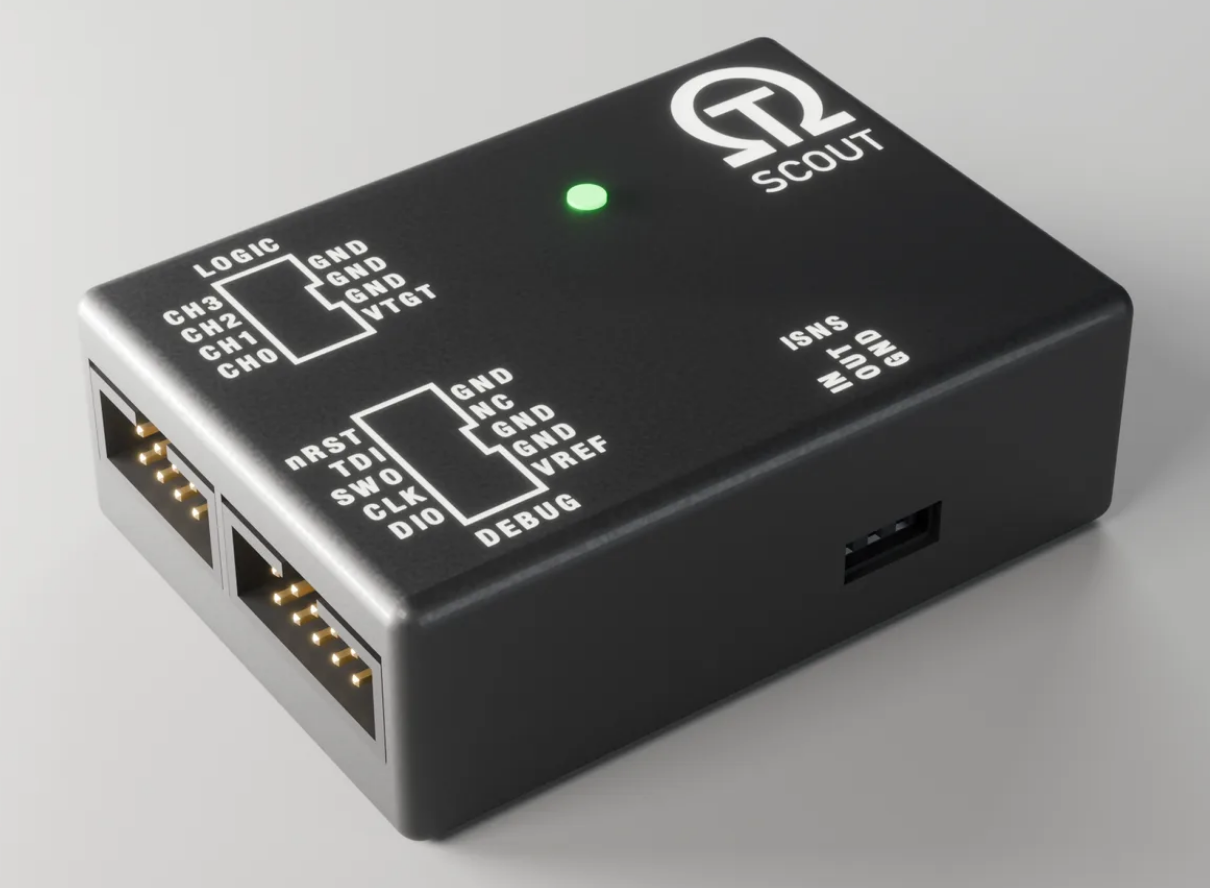
The Scout wireless probe is an all-in-one debugger, logic analyzer, protocol generator, and ultra-low current sensor.
No pricing yet but you can sign up to be notified when it’s available.
Matts New Hardware
M5Stack CoreMatrix
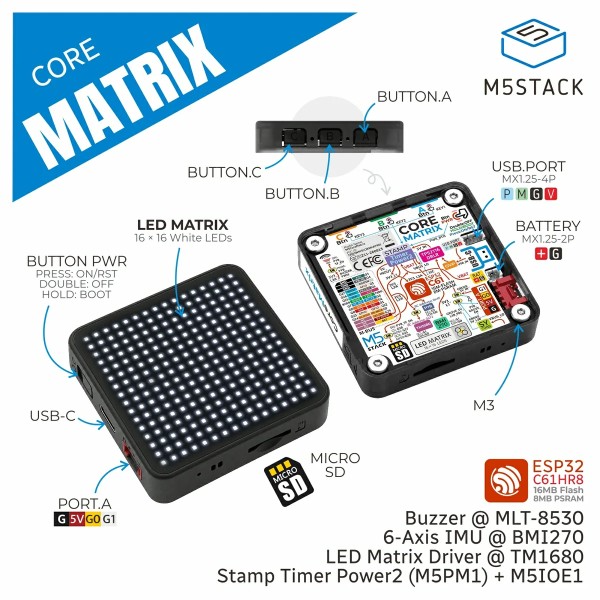
The CoreMatrix is M5Stack’s latest Core dev board. It features the relatively new ESP32-C61 (close to a C6 but with PSRAM support) and a white LED 16x16 matrix on the face.
Specs:
- ESP32-C61, 16MB flash, 8MB RAM
- 16x16 white LEDs controlled by a TM1680
- 6-axis IMU BMI270
- Built-in Stamp Timer Power2 for power management
I have a PR for the board definition (PR #20,000!) as well as an application repository (m5stack-core-matrix-app) that installs all the drivers and has some examples.
US$30
M5Stack RollerCAN Lite
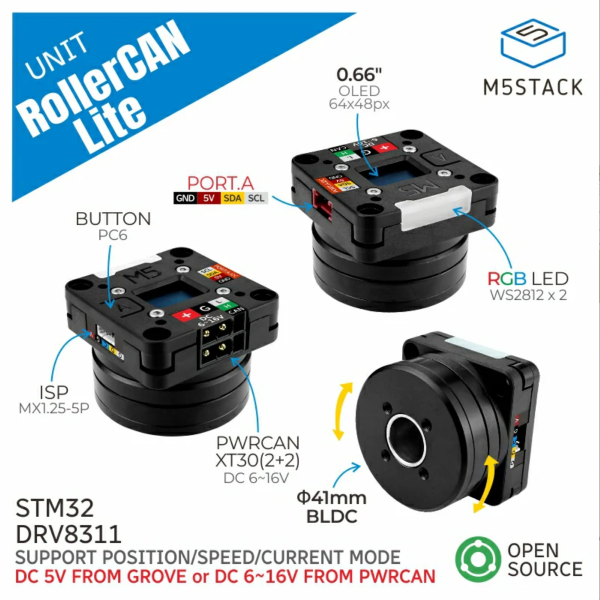
The RollerCAN Lite is a brushless DC motor featuring CAN (or I2C) control. It’s helping continue my deep-dive with CAN devices…
US$35
DoF10, Step16
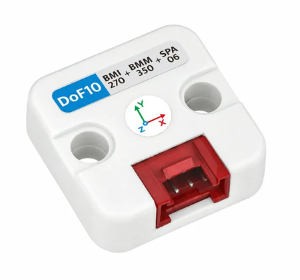
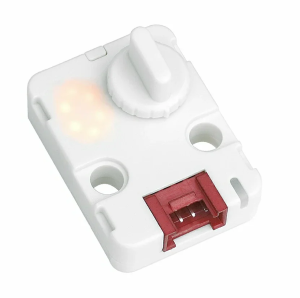
I threw in a couple of I2C devices: Unit DoF10 is a 10-axis attitude sensor, basically squishing in a 6-axis IMU, a 3-axis magnetometer and a barometric pressure sensor. Step16 is a 16-step rotary encoder, spin it around, display a hex digit and query it over I2C.
US$10 and US$6 respectively.
ESP-Mosaico
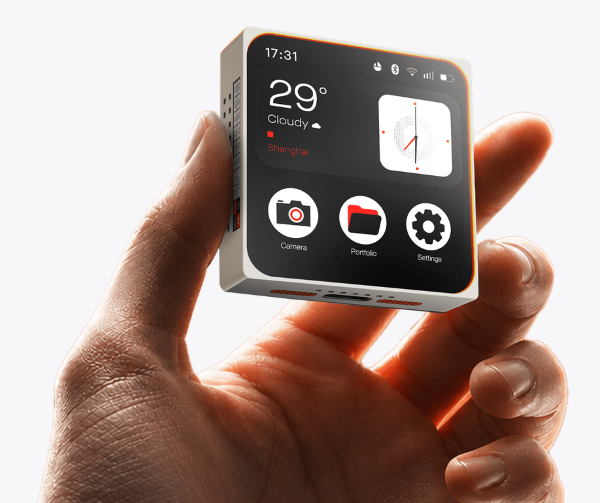
The ESP-Mosaico is a new dev board from Espressif, seemingly to showcase one of their latest chips, the ESP32-S31.
The S31 is a pretty potent chip, with a lot of the grunt of the P4 but with a radio. And support for 1Gbps Ethernet.
Specs:
- ESP32-S31, dual-core 320MHz RISC-V
- 512K RAM, 16MB PSRAM, 16MB NOR Flash, 128MB NAND Flash
- 480x480 2.16” QSPI cap-touch display
- 6-axis IMU + dual magnetometers
- 65mAh battery
- Magnets!
US$60
WeAct Studio boards
I also picked up a few WeAct Studio boards.
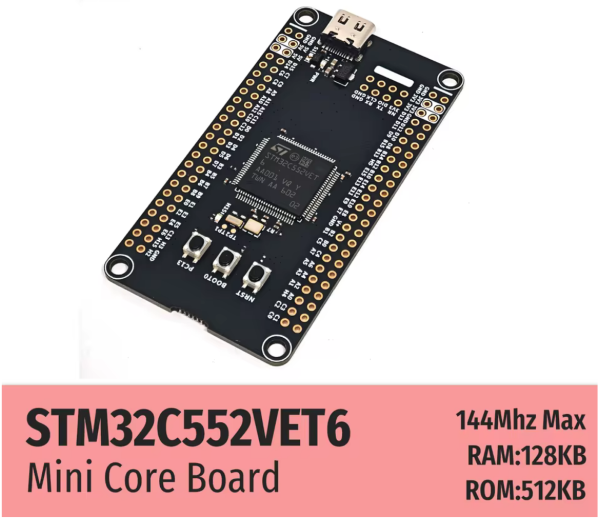
This STM32C552 board has 128KB RAM, 512KB Flash.
A$9
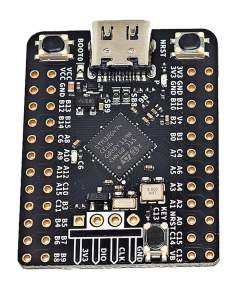
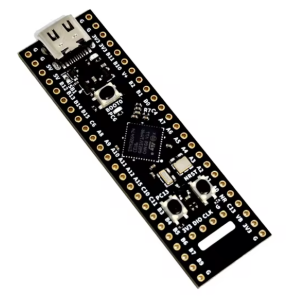
Both of these are powered by the STM32G474 and also have 128KB RAM, 512KB Flash.
A$14 ea
Software
Mars Racer
I built my own garage door opener!
Dan Aukes build his own garage door opener…
Automatic Lego water tap control
Laurens Valk built an automatic tap control, for his cat…using Lego.
Quick Bytes
What’s included in the XIAO STM32C5?
Final Thoughts
Unexpected Maker Smart Hub
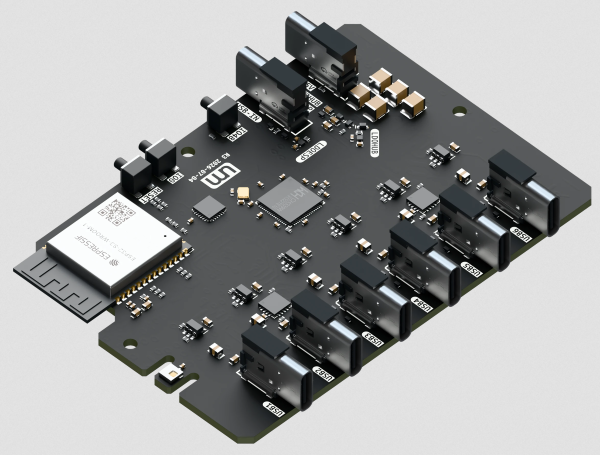
Seon (Unexpected Maker) has released a very handy new device; a Smart 6-port USB Hub. What makes it smart is that you can control - over a wifi connection - which ports are on/off and you can monitor the power consumption of each port. You can also configure power scheduling on each port - so you could turn devices off overnight for example.
A$45 (or A$60 with a case)
M-Vave FM-1
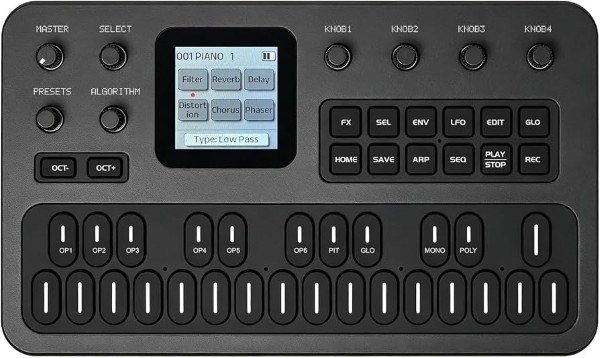
The M-Vave FM-1 has generated a ton of buzz recently! It’s a tiny little pocket synth that most assumed was little more than a toy. However, the community reverse engineered the device and architecture and open-sourced all the information and found that this little synth packs a punch!
There are now hundreds of interesting firmwares that have been released, ranging from serious synth grooveboxes to ambient audio generators…to fart players. Even better, the company has encouraged the community development and even open-sourced their - originally closed - firmware.
US$60-80 (best to buy from AliExpress but check the shipping conditions carefully)
Midjourney fun
Our loveable avatar for MicroPython, stuck within the giant LLM.